
Indoor vs Outdoor Boat Storage: Pros, Cons & Costs
By FindBoatStorage Research Team · Published January 2026 · Updated February 2026 · Based on verified data from our directory
Indoor vs. Outdoor Boat Storage: Pros, Cons & Costs
The indoor vs. outdoor debate is the most common storage decision boat owners face. The right answer depends on your boat's value, how often you use it, where you live, and what you are willing to spend. This guide gives you a straight comparison — including a third middle-ground option many owners overlook — so you can make the right call without second-guessing it next spring.
The Three Storage Categories
The decision isn't strictly binary. Most markets offer three practical options:
- Outdoor uncovered storage: Open lot, basic security, lowest cost
- Covered / carport storage: Roof overhead, open sides — the middle-ground option
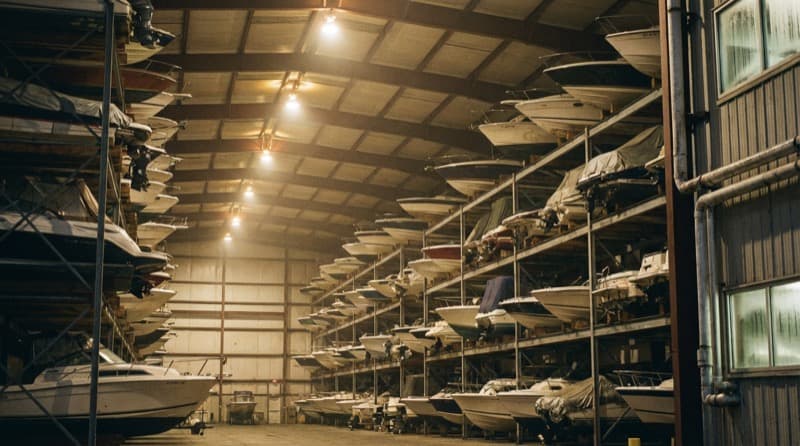
- Indoor / enclosed storage: Full building enclosure, highest protection and cost
For most boat owners, the right question is not simply "indoor or outdoor?" but "where does covered storage fit into my situation?" We'll cover all three thoroughly.
The Core Trade-Off
Outdoor storage is significantly cheaper. Indoor storage significantly reduces weather damage and theft risk. Covered storage sits between both in cost and protection level. Everything else in this decision flows from that fundamental trade-off. The question is whether the protection level is worth the price difference for your specific boat, climate, and usage pattern.
Outdoor Boat Storage: Full Analysis
What You Get
Outdoor storage means your boat sits on a paved or gravel lot under open sky. Most facilities have basic perimeter fencing and a gate, though security quality varies widely. You typically get 24/7 access or extended access hours. Many outdoor lots accommodate longer boats and wider trailers more easily because there are no dimensional constraints from a building structure.
Pros of Outdoor Storage
- Cost. Outdoor storage is the most affordable option, typically running $50–$200/month depending on size and location. That is $600–$2,400 annually — often $1,000–$3,000 less per year than equivalent indoor storage.
- Availability. Outdoor lots have more capacity. During peak season (spring and early summer), indoor units fill up fast. Outdoor spaces are easier to find on short notice.
- No size restrictions. Open lots accommodate boats of all lengths and heights, wide trailers, and oversized rigs that will not fit in a standard indoor stall. If you have a tall tower, outriggers, or a wide beam, outdoor is often your only option.
- Convenience. Many outdoor facilities offer drive-in access, making it easy to hitch up and leave without maneuvering through tight aisles or waiting for staff assistance.
- Flexibility. Month-to-month contracts are more common at outdoor facilities, making it easier to leave without paying early termination fees if your situation changes.
Cons of Outdoor Storage
- UV damage. Prolonged sun exposure degrades upholstery, canvas, vinyl flooring, and gelcoat. UV damage is cumulative — a few seasons outdoors without quality covers accelerates aging significantly. This shows up as faded cushions, chalky gelcoat, cracked vinyl, and brittle canvas.
- Weather exposure. Rain pools inside improperly covered boats, bird droppings are constant, and hail can damage fiberglass. In northern states, freeze-thaw cycles damage any water left in the bilge, engine, or water systems. Even one frost event with standing water in the engine can crack a block.
- Higher maintenance costs. Boats stored outdoors require more frequent cleaning, cover replacement, and UV protection product application. These costs partially offset the apparent savings in storage fees over a 5–10 year period.
- Security. Open lots with basic fencing are more susceptible to theft than enclosed buildings. Electronics, trolling motors, outboard engines, and life jackets are common targets. On a boat stored outdoors, there is no barrier beyond the gate and your lock.
Covered / Carport Boat Storage: The Middle Ground
What You Get
Covered storage places your boat under a roof — either a carport-style metal structure or a covered row within a larger facility — while leaving the sides open to airflow. This option is underutilized by boat owners who focus only on the indoor vs. outdoor binary, yet it often delivers the best value in cost-protection ratio.
Pros of Covered Storage
- UV elimination. The roof blocks direct sun exposure — the primary driver of gelcoat oxidation, canvas degradation, and upholstery fading. Most UV damage prevention comes from eliminating direct sun, not from full enclosure.
- Rain protection. A roof prevents rain from pooling on the boat cover or directly on the boat. Combined with a fitted cover, rain infiltration is effectively eliminated.
- Significant cost savings vs. indoor. Covered storage typically runs $100–$250/month — meaningfully cheaper than indoor at $200–$500+ while providing substantially better weather protection than outdoor.
- Better airflow than indoor. Open-sided structures allow natural airflow, which reduces mold and mildew risk compared to a sealed building with poor ventilation.
Cons of Covered Storage
- Limited security upgrade. Covered spaces don't typically add a building lock over outdoor lots — you're still in an open perimeter, just under a roof.
- Wind-driven rain and debris. In storms with horizontal rain or high winds, open-sided structures provide limited protection on the windward side.
- Size limitations. Some covered facilities have height restrictions based on roof clearance. Towers and antennae can be a problem at facilities with low-clearance canopies.
Indoor Boat Storage: Full Analysis
What You Get
Indoor storage places your boat inside a building — either a large warehouse-style facility or individual enclosed units. Some indoor facilities are climate-controlled, maintaining a consistent temperature and humidity range year-round. Others are simply enclosed with no climate control but still provide full protection from the elements.
Pros of Indoor Storage
- Complete weather protection. No UV exposure, no rain infiltration, no hail, no freeze damage from winter weather. Boats stored indoors consistently show less oxidation, fading, and material degradation over time compared to outdoor-stored boats of the same age.
- Security. An enclosed building is substantially harder to break into than a fenced outdoor lot. Most indoor facilities have multi-layer access controls — outer gate plus building lock plus, in some cases, individual unit lock.
- Lower maintenance costs over time. Boats stored indoors stay cleaner, require fewer cover replacements, and show less UV-related degradation. Over a 5–10 year period, the cumulative maintenance cost difference between indoor and outdoor storage is measurable.
- Insurance benefits. Many marine insurance providers offer lower premiums for boats stored in enclosed facilities. The discount varies by insurer but can be meaningful for high-value vessels — sometimes $100–$400/year.
- Resale value protection. A boat that has been stored indoors for its life shows better condition at resale — better gelcoat, fresher upholstery, and less visible weathering — which supports higher asking prices and faster sales.
Cons of Indoor Storage
- Cost. Enclosed storage costs $200–$600/month for most boat sizes — often 2–4x the cost of outdoor. The premium adds up to $1,500–$5,000 or more per year depending on location and boat size.
- Size restrictions. Buildings have fixed door heights and stall widths. Tall towers, outriggers, or wide catamarans may not fit in standard enclosed spaces. Always measure height, width, and length (including trailer) before assuming an indoor unit works.
- Availability. Indoor units are limited by building square footage. They fill up faster and may have waiting lists at popular facilities, especially in high-density boating markets.
- Access logistics. In some indoor facilities, your boat is not directly accessible — staff or a forklift moves it in and out. This limits spontaneous retrieval and adds time to each trip. For frequent boaters who want to grab the boat on short notice, this is a meaningful drawback.
Impact on Boat Maintenance and Condition
| Maintenance Factor | Outdoor Storage | Covered Storage | Indoor Storage |
|---|---|---|---|
| Cover replacement frequency | Every 2–3 years | Every 3–5 years | Every 5–7 years |
| Gelcoat oxidation | Visible within 3–5 years | Slowed significantly | Minimal for 10+ years |
| Canvas / upholstery fading | Accelerated in sun and heat | Minimal above the waterline | Minimal |
| Bilge cleaning frequency | Every 1–2 months | Every 2–3 months | 2–3 times per season |
| Pest risk | Higher | Moderate | Lower |
| Annual detailing time | Higher | Moderate | Lower |
Climate Considerations by Region
Where you live is one of the most important factors in this decision.
Northern States (Midwest, Northeast, Pacific Northwest)
Freeze-thaw cycles make proper winterization essential regardless of storage type. Indoor storage eliminates the risk of unexpected freezes damaging equipment, and reduces snow load on covers. For boats stored more than 4 months of the year in states like Michigan, Minnesota, or New York, indoor storage provides the clearest economic argument when combined with reduced maintenance costs.
Southern States (Florida, Texas, Gulf Coast)
The primary threat in the South is UV radiation, not freezing temperatures. UV damage to gelcoat, upholstery, and canvas is severe after multiple seasons of outdoor storage in direct sun. Covered storage eliminates most of this concern at a fraction of the indoor cost. In Florida especially, a covered carport space often makes more financial sense than paying the significant premium for indoor storage unless you have a high-value vessel.
Southwest (Arizona, Nevada, New Mexico)
Intense UV combined with dry heat accelerates material degradation faster than almost any other climate. Desert regions also have low humidity, which reduces mold risk — outdoor or covered storage is viable, but UV protection is critical. Indoor storage is particularly valuable for boats with fiberglass hulls that can develop stress cracks from extreme temperature cycling.
Pacific Coast (California, Oregon, Washington)
Moderate temperatures mean freeze damage is rare, but salt air (in coastal areas) and moisture (in the Pacific Northwest) are real concerns. Salt air corrosion on metal fittings and electronics is best managed with covered or indoor storage. In the Seattle-to-Vancouver corridor, the constant moisture makes indoor storage particularly valuable for protecting electrical systems and preventing mold in cabin upholstery.
When to Choose Outdoor Storage
- Your boat is worth less than $15,000 and you maintain it regularly with a quality cover
- You use a custom-fit canvas or shrink-wrap cover and inspect it every few weeks
- You are in a mild climate with limited UV intensity and no significant hail or freeze risk
- Your boat is too wide, tall, or long to fit in available indoor units
- Budget is the primary constraint and you accept the higher ongoing maintenance burden
- You need frequent access and don't want to work around a facility's forklift schedule
When to Choose Covered Storage
- Your boat is worth $10,000–$30,000 and you want meaningful protection without the full indoor premium
- You're in a sunny, warm climate where UV is the primary threat (not freezing temperatures)
- Indoor availability is limited or waitlisted in your area
- Your boat has a tall tower or wide beam that creates indoor size challenges
- You want better protection than outdoor but the indoor premium isn't justified by your boat's value
When to Choose Indoor Storage
- Your boat is worth more than $25,000 — the math on protection vs. cost changes at this level
- You store in a climate with harsh winters, heavy UV, or regular hail risk
- Your insurance provider offers a meaningful premium discount for enclosed storage
- You are storing the boat for 6+ months without visits and want zero maintenance concerns during that period
- You plan to sell within 5 years and want to protect resale condition and value
- You want the security of a building lock in addition to a perimeter gate
Side-by-Side Comparison
| Factor | Outdoor Storage | Covered Storage | Indoor Storage |
|---|---|---|---|
| Typical monthly cost | $50–$200 | $100–$250 | $200–$600 |
| Weather protection | Minimal | Good (roof only) | Complete |
| UV protection | Cover-dependent | Roof blocks direct sun | Full |
| Security level | Basic to moderate | Basic to moderate | Moderate to high |
| Size flexibility | High | Moderate | Limited by building |
| Availability | Generally available | Good availability | Often limited / waitlisted |
| Maintenance impact | Higher ongoing costs | Moderate | Lower ongoing costs |
| Insurance premium effect | Standard | Slight discount (some insurers) | Often discounted |
| Resale value impact | Moderate | Good | Best |
| Access convenience | High | High | Variable (may need scheduling) |
The Financial Calculation
For most boat owners with a boat worth $20,000 or more and a storage period longer than 4 months, indoor or covered storage is the financially sound choice when you factor in the full cost picture: reduced cover replacement, less annual detailing time, better gelcoat condition at resale, and potential insurance savings.
For a well-maintained boat worth under $15,000, quality outdoor storage with a proper cover remains a perfectly reasonable approach — provided you're disciplined about covering it correctly, inspecting regularly, and following a proper winterization process each year.
The worst outcome is choosing outdoor storage to save money and then not maintaining the cover — leaving the boat effectively unprotected. At that point you're paying outdoor prices but getting less protection than a properly covered outdoor-stored boat, with repair and depreciation costs that exceed what indoor storage would have cost.
Search for boat storage facilities near you to compare outdoor, covered, and indoor options with actual pricing in your area. Availability for indoor units especially goes quickly before peak season — don't wait until spring to start looking.
Related Tools
📐Storage Size Guide →
Find the right spot size for your specific vehicle — with storage type recommendations.